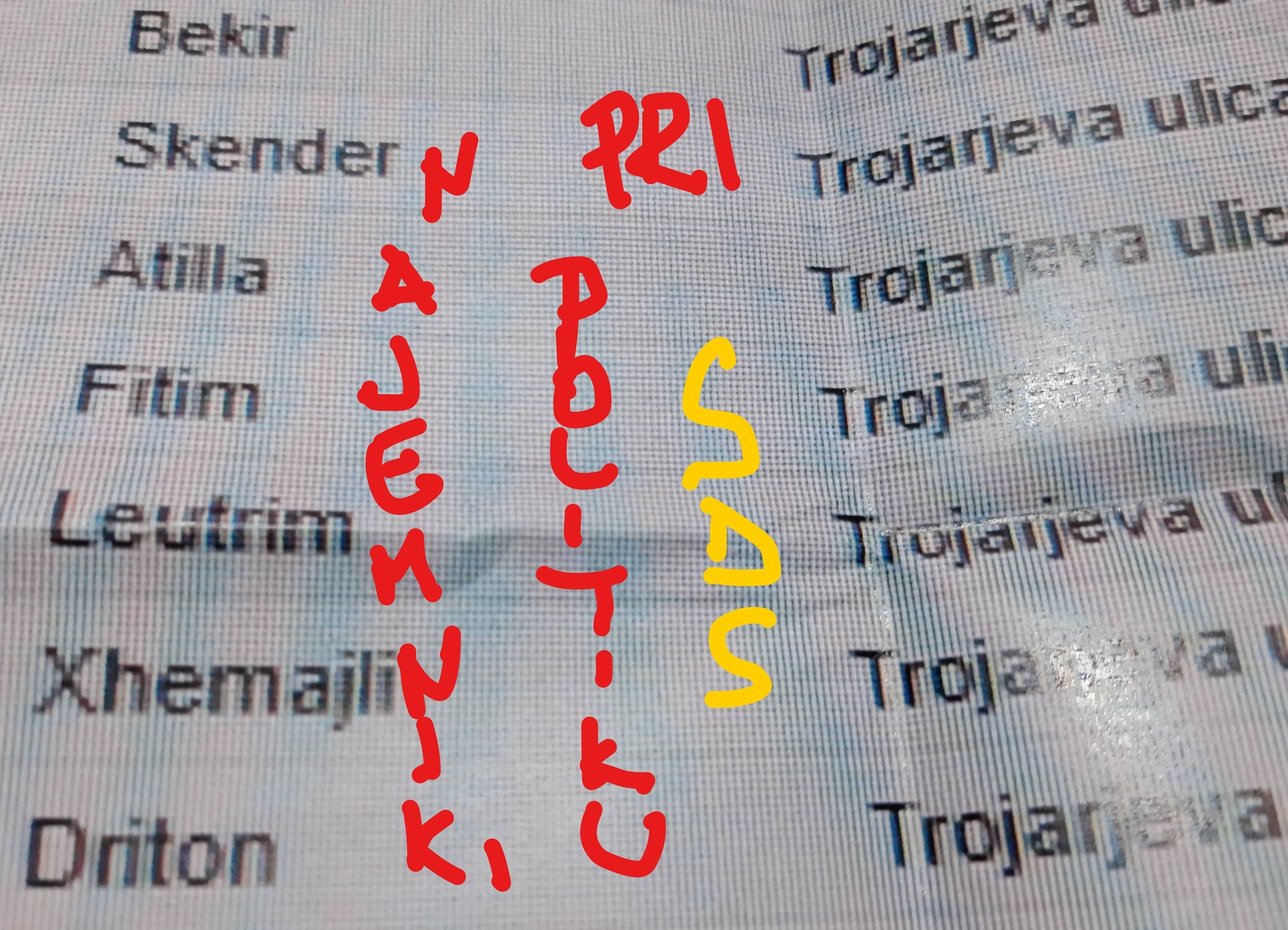
V volilni imenik so vpisani
državljani Republike Slovenije s stalnim prebivališčem v Sloveniji,
državljani EU s stalnim prebivališčem v Sloveniji, državljani Republike Slovenije, ki nimajo stalnega prebivališča v Sloveniji, in imetniki volilne pravice za volitve v Evropski parlament.
Uvoženi brez državljanstva EU države načeloma ne morejo voliti.
Non-EU nationals living in Europe don't have many voting rights but some countries do allow them to cast a ballot in local elections. Here's what you need to know.

www.thelocal.com
Denmark, Sweden, Finland, Norway and Iceland also mutually guarantee the right to vote for municipal and regional councils as part of the Nordic Passport Union.
//Skandinavci zahtevajo vsaj 3 leta rezidentstva.
Another country that grants municipal voting rights to some citizens beyond the EU is
Spain. Madrid has signed bilateral agreements with Norway, Iceland, the UK, Bolivia, Cape Verde, Chile, Colombia, Ecuador, New Zealand, Peru, Paraguay, South Korea and Trinidad y Tobago. The residency requirement is set in each agreement.
Other EU countries that grant local voting rights to non-EU citizens are Belgium, Estonia, Ireland, Lithuania, Luxembourg, the Netherlands, Slovakia and Slovenia. Again, each country has its own residency requirements.
Portugal has agreements on voting rights in local elections with Brazil, Cape Verde, Argentina, Chile, Colombia, Iceland, Norway, New Zealand, Peru, Uruguay, Venezuela, as well as with the UK for citizens who were living in the country before Brexit. Some Brazilian residents have full voting rights in
Portugal.
Austria,
France,
Germany and Italy do not allow non-EU citizens to take part in local elections, although the issue has been debated in recent years. This would require constitutional changes, however.
In Switzerland, which is not part of the EU, foreign nationals do not have the right to vote at federal level but they can participate in some cantonal and communal elections.



vecer.com